How to Mix Patterns With an AI Outfit Planner: A Beginner-Friendly Guide
Learn how to mix stripes, florals, checks, and prints without clashing. Discover how an AI outfit planner helps you combine patterns confidently with smart color matching and proportion tips.
Mixing patterns is one of the fastest ways to make an outfit look intentional and stylish—but it is also where most people hesitate. Stripes with florals? Checks with polka dots? The fear of clashing keeps many wardrobes stuck in solid-color safety. The good news: you do not need a fashion degree to mix prints well. You just need a few rules and, ideally, an AI outfit planner to preview the result before you step outside.
Why Pattern Mixing Feels Hard
The human eye is excellent at detecting visual conflict. When two patterns compete for attention—similar scale, unrelated colors, or clashing rhythms—the brain registers "something is off" even if you cannot name it. That discomfort makes people default to one print per outfit, or skip prints entirely.
But pattern mixing is not random. It is a system of scale, color, and rhythm. Once you understand those three levers, you can combine prints deliberately instead of avoiding them.
The Three Rules of Pattern Mixing
1. Vary the Scale
Never pair two patterns of the same size. If both prints are medium-scale, they fight for dominance. Instead, combine one large-scale print with one small-scale print.
| Primary Pattern | Secondary Pattern | Why It Works |
|---|---|---|
| Large floral skirt | Fine pinstripe blouse | Scale contrast creates hierarchy |
| Bold buffalo check coat | Mini polka-dot scarf | One dominates, one accents |
| Wide stripe sweater | Micro-print trousers | Eye settles on the larger first |
The large print becomes the statement. The small print becomes texture. That hierarchy is what makes the combination feel controlled.
2. Unify the Color Palette
Two different patterns can coexist if they share at least one color. That shared hue acts as a bridge.
- Safe approach: Keep both prints in the same color family (navy and white stripes with navy and white florals).
- Advanced approach: Use a shared accent color. A rust-orange stripe in one piece and a rust-orange leaf in another ties them together even if the base colors differ.
An AI outfit planner can scan both pieces and surface the shared color bridge automatically—something the human eye often misses under closet lighting.
3. Match the Rhythm, Not the Pattern
Rhythm refers to the spacing and repetition of the print. Tight, regular repeats (gingham, pinstripes) behave differently than loose, organic repeats (watercolor florals, abstract swirls).
- Pair structured + organic: a rigid grid check with a flowing botanical print.
- Avoid structured + structured unless one is extremely subtle: two rigid patterns feel like a uniform.
- Avoid organic + organic unless the scales are very different: two loose prints can look like visual noise.
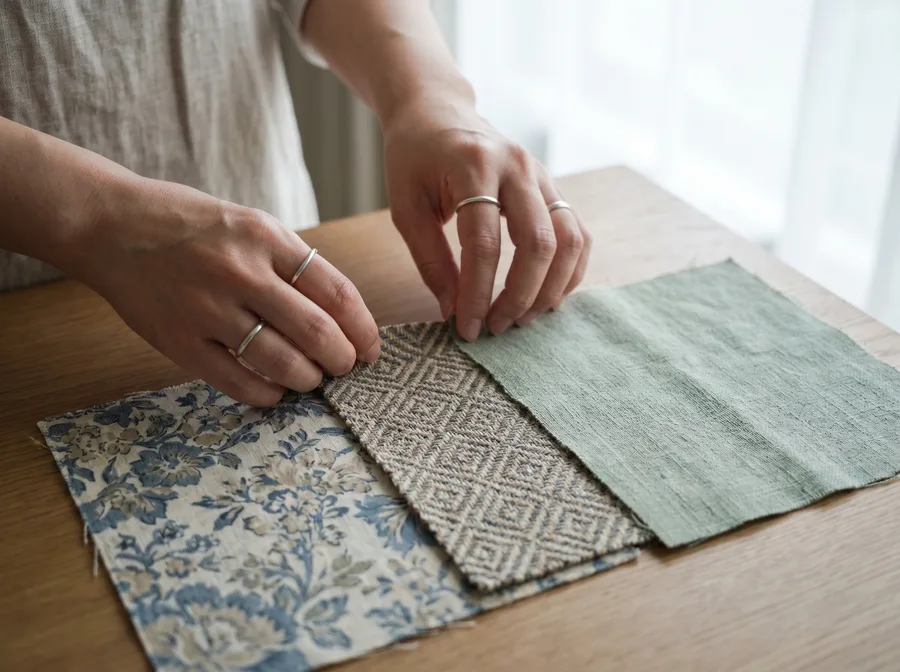
Common Pattern Pairings That Work
Here is a starter set of combinations that consistently succeed, with notes on why:
| Pairing | Difficulty | Key to Success |
|---|---|---|
| Stripes + Florals | Easy | Keep stripes narrow; let floral be the hero |
| Checks + Polka Dots | Easy | Match a color from the check to the dot color |
| Animal Print + Stripes | Medium | Use animal print as the neutral; keep stripes crisp |
| Plaid + Floral | Medium | Ensure floral has a "ground" color that matches plaid base |
| Two Stripes | Advanced | Different directions (horizontal vs. vertical) and different widths |
| Two Florals | Advanced | One dense/tiny, one open/large; never same scale |
If you are building an AI outfit generator for work from home looks, these pairings are especially useful. Video-call dressing often means a patterned top with a neutral bottom—but a subtle secondary pattern in a scarf or background detail adds polish without distraction.
How an AI Outfit Planner Helps
Pattern mixing is a visual problem. Text advice helps, but you still have to imagine the result. An AI outfit planner closes that gap by showing you the combination rendered as a full look.
Visual Compatibility Scoring
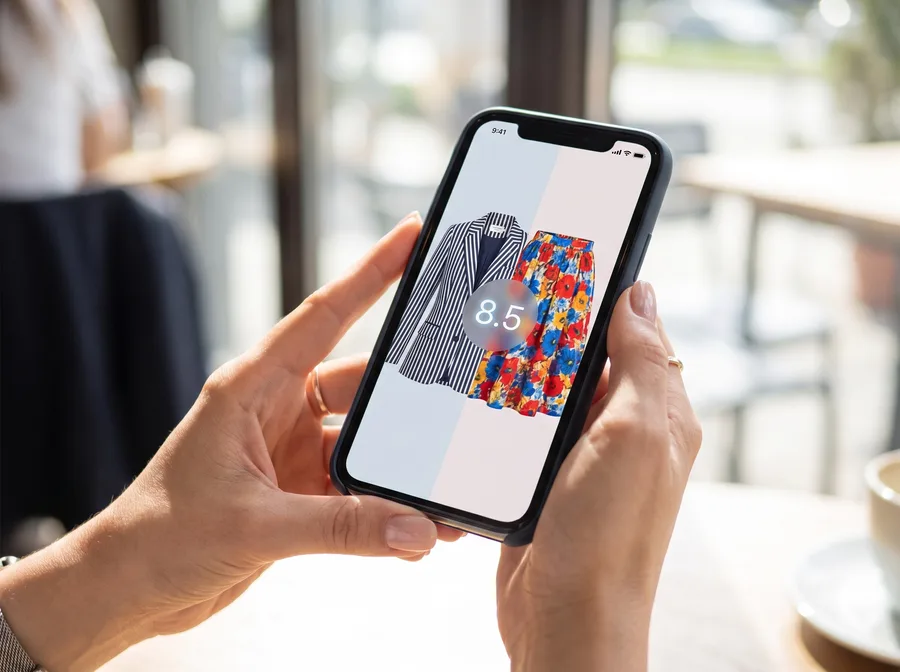
fAIshion's Mix Gallery does not just place two thumbnails side by side. It evaluates color overlap, scale contrast, and formality alignment, then scores the combination. High scores mean the prints harmonize; low scores mean one element needs to change.
Iteration Without the Closet Mess
In a physical wardrobe, testing combinations means pulling everything out, trying it on, and hanging it back. With an AI planner, you swap one piece and instantly see the new combination. That speed encourages experimentation. You will try pairings you would never bother testing in real life—and some of them will surprise you.
Contextual Filtering
Not every pattern mix works for every occasion. An AI stylist can filter by dress code, season, and even your calendar. A bold stripe-and-floral combo might score perfectly for a weekend brunch but flag as too loud for a client presentation. Context-aware filtering saves you from great combinations at the wrong time.
Building Your First Mixed-Print Outfit With AI
Here is a practical workflow using fAIshion:
Step 1: Start With One Anchor Piece
Pick the print you want to feature. This is usually the item you love most or the one with the boldest pattern. Enter it into your Wardrobe or Wishlist so the AI knows it is a fixed point.
Step 2: Ask for Complementary Pieces
Use the AI Stylist Agent with a specific prompt: "I want to wear this floral midi skirt. Show me tops that mix well with it for a casual Friday." The agent will return candidates filtered by color bridge, scale contrast, and formality.
Step 3: Review Mix Gallery Previews
Open each candidate in Mix Gallery. You will see the full outfit rendered, not just the two items stacked. Pay attention to how your eye moves: does it settle comfortably, or does it jump between competing prints?
Step 4: Adjust With Accessories
If the combination feels 90% there, an accessory can finish it. A belt in the shared bridge color, or shoes that pick up the secondary print's base tone, often resolves the last bit of tension. The AI can suggest these finishing pieces from your Owned inventory.
Pattern Mixing Mistakes to Avoid
| Mistake | Why It Fails | The Fix |
|---|---|---|
| Same scale, different prints | Visual competition; no hierarchy | Change one piece to a much larger or much smaller scale |
| No shared color | Prints feel unrelated, random | Add a belt, bag, or shoe in a color both prints share |
| Too many prints in one outfit | Three patterns overwhelm the eye | Limit to two prints; use solids for the third piece |
| Ignoring fabric texture | A stiff plaid and a stiff stripe feel like costume | Pair structured print with softer, draping fabric |
| Forgetting the occasion | A loud mix at a conservative event undermines you | Use the AI's context filter to match pattern boldness to dress code |
The Confidence Factor
Pattern mixing is as much about attitude as it is about rules. The best mixed-print outfit in the world will not work if you feel self-conscious wearing it. The value of an AI outfit planner is that it lets you see the result before you commit. You walk into the room already knowing the combination works. That confidence changes how you carry the outfit—and how others perceive it.
The Bottom Line
Mixing patterns is not a talent you are born with. It is a skill you build by understanding scale, color bridges, and rhythm—then practicing safely with previews. An AI outfit planner removes the guesswork and the closet chaos, letting you test combinations in seconds instead of hours. Start with one anchor print, let the AI suggest complements, and review the full look in Mix Gallery before you buy or wear.
Ready to mix prints with confidence? Try fAIshion's AI Stylist to preview pattern combinations, build mixed-print outfits from your wardrobe, and see the full look before you commit.