Layering Outfits in Winter Using AI Suggestions: Stay Warm Without the Bulk
Master the art of winter layering with AI-powered outfit suggestions. Learn how to build warm, stylish layered looks for any occasion using fAIshion's intelligent styling engine.
Winter dressing is a puzzle: how do you stay warm enough for the commute, cool enough for the overheated office, and stylish enough for dinner afterward? The answer is strategic layering—and an AI stylist can solve that puzzle in seconds. Learning layering outfits in winter using AI suggestions means never again choosing between a puffy coat that steams you alive indoors and a blazer that leaves you shivering at the bus stop.
Why Layering Matters More in Winter
Cold weather forces a choice most other seasons avoid: function vs. form. A single heavy coat looks great in a campaign photo but falls apart the moment you step into a heated building. Layering spreads warmth across multiple pieces so you can add or remove as conditions change.
The hidden benefit is outfit depth. A well-layered look reads as intentional and textured. It shows planning. And it multiplies your wardrobe: three base pieces plus two layers creates more distinct combinations than most people realize.
The Science of Warm Layers
Not all layers are equal. Understanding how heat retention works helps you choose smarter pieces—and helps an AI stylist choose them for you.
| Layer Role | Purpose | Best Fabrics | Example Pieces |
|---|---|---|---|
| Base | Wicks moisture, sits against skin | Merino wool, silk, synthetic blends | Thermal tops, lightweight long-sleeves |
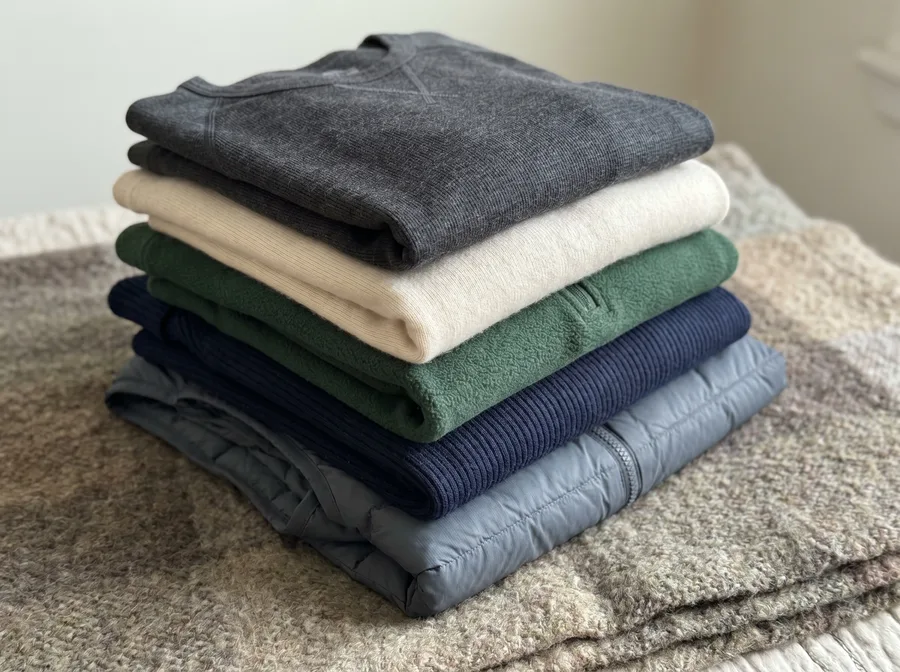
| Mid | Traps heat, provides insulation | Fleece, down, wool, cashmere | Sweaters, cardigans, quilted vests |
| Outer | Blocks wind and water, seals warmth | Gore-Tex, waxed cotton, wool coats | Parkas, trenches, overcoats |
| Accessory | Seals gaps where heat escapes | Wool, cashmere, leather | Scarves, gloves, beanies |
The key insight: thickness is not warmth. A thin merino base layer traps more body heat than a thick cotton sweatshirt because wool retains warmth even when damp. An AI outfit planner knows these material properties and weights them when building cold-weather looks.
Common Layering Mistakes
Even experienced dressers get winter layers wrong. Here are the most frequent errors—and how AI suggestions prevent them:
Oversizing Every Layer
Adding bulk on bulk creates a silhouette that swallows your shape. The fix: one structured layer per outfit. If your coat is boxy, keep the sweater fitted. If your sweater is oversized, choose a tailored coat. fAIshion's Mix Gallery previews the full silhouette so you spot proportion problems before you leave the house.
Ignoring Color Temperature
Winter palettes tend toward neutrals, but stacking gray on gray on black reads as muddy. AI suggestions inject accent colors at the right layer—often the mid layer, where a burgundy sweater or forest green cardigan peeks out from under a neutral coat.
Forgetting the Transition Plan
The biggest layering failure is not the outfit itself—it is having nowhere to put the layers. An AI stylist considers your day arc: office with coat check vs. café hopping vs. outdoor walking meetings. It suggests layer combinations that pack down small or drape elegantly over a chair.
Building a Winter Layering System
Instead of buying random warm pieces, build a layering system: a set of bases, mids, and outers that all work together. Here is a compact system that covers most winter scenarios:
Base Layer Options (3–4 pieces)
- Lightweight merino crew neck: the default for most days
- Silk or thermal long-sleeve: for the coldest days or formal contexts
- Turtleneck or mock neck: adds neck coverage without a scarf
- Thin collared shirt: for office days that need to look structured
Mid Layer Options (4–5 pieces)
- Fine-gauge cashmere or wool sweater: dressy, warm, low bulk
- Chunky knit cardigan: casual, easy to remove, adds texture
- Quilted vest: core warmth without restricting arms
- Fleece or technical midlayer: for active or commuting days
- Blazer or structured knit jacket: bridges office and casual
Outer Layer Options (2–3 pieces)
- Wool overcoat: the dressed-up default
- Parka or puffer: the functional default
- Trench or field jacket: for milder or transitional days
An AI outfit planner can map this system to your actual wardrobe, flagging which combinations work and which gaps leave you without options.

AI-Powered Layering Strategies
Here is where layering outfits in winter using AI suggestions becomes genuinely useful. A smart stylist does not just pick random warm pieces—it applies strategies based on your schedule, location, and preferences.
Strategy 1: The Temperature Gradient
The AI reads your local weather and plans a gradient of warmth. A 20-degree morning commute with a 65-degree office gets: thermal base + wool sweater + packable down vest under a wool coat. The vest comes off at the office. The coat hangs. The base and sweater handle the indoor temperature.
Strategy 2: The Color Stack
Winter outfits risk becoming monochrome. The AI builds a color stack: neutral base, rich mid-tone mid layer, neutral outer. The mid layer becomes the visual anchor. In Mix Gallery, you see how the stack reads from different angles and distances.
Strategy 3: The Texture Mix
Smooth base + fuzzy mid + structured outer = visual interest without pattern overload. The AI knows which textures in your wardrobe complement each other and which clash. A silk base under cashmere under wool reads as luxurious. A fleece mid under a shiny puffer reads as technical. Both are valid; the AI matches the texture mix to the occasion.
Strategy 4: The Quick-Change Layer
Some days require multiple contexts: client meeting, then casual lunch, then evening event. The AI plans around a core outfit (base + mid) and suggests two outer options that transform the look. A tailored coat for the meeting. A leather jacket for the evening. Same base, different energy.
How fAIshion Builds Winter Layers
fAIshion's AI Stylist Agent approaches winter layering with specific product features:
Wardrobe-Aware Suggestions
Upload or save your winter pieces to Wardrobe, and the AI builds exclusively from what you own. It will suggest buying a merino base layer only if your current bases are cotton (which loses insulation when damp). It respects your existing investments.
Weather Integration
The stylist can factor in forecast data when available, adjusting layer thickness and material recommendations for the specific day. A rainy 35-degree day gets different suggestions than a dry 20-degree day.
Mix Gallery Previews
Every layered outfit renders in Mix Gallery as a full look. You see how the hem lengths stack, where colors interact, and whether the silhouette feels balanced. This is especially valuable for layering, where proportion mistakes are easy to make and hard to fix once you are dressed.
Trending Winter Inspiration
Browse Trending for seasonal tags like "winter layers" or "cozy chic." See how other users in similar climates are solving the same problem. Save looks you like and ask the AI to adapt them to your wardrobe.
Outfit Formulas for Winter Scenarios
Here are five winter situations and the layered outfits an AI stylist builds for each:
1. Freezing Commute, Overheated Office
- Base: Merino thermal top
- Mid: Fine-gauge cashmere sweater
- Outer: Wool overcoat + cashmere scarf
- Transition: Scarf and coat off at desk; sweater handles indoor warmth
2. Outdoor Walking Meeting
- Base: Synthetic blend long-sleeve (moisture management)
- Mid: Fleece pullover
- Outer: Parka with hood
- Why it works: Active warmth that breathes; hood for wind protection
3. Casual Weekend Brunch
- Base: Turtleneck in a rich color
- Mid: Chunky cardigan or chore coat
- Outer: Field jacket or denim jacket layered over
- Why it works: Textural interest; easy to remove a layer if the café is warm
4. Evening Dinner Date
- Base: Silk or thin wool turtleneck
- Mid: Tailored blazer
- Outer: Wool overcoat in a complementary neutral
- Why it works: Reads as intentional and warm; coat check friendly
5. Snow Day (Function First)
- Base: Heavy thermal set
- Mid: Down sweater or vest
- Outer: Waterproof parka
- Accessories: Insulated gloves, wool beanie, waterproof boots
- Why it works: Maximum warmth; every layer serves a specific thermal purpose
The Layering Mindset
The best winter dressers think in systems, not outfits. They know which bases work with which mids. They have a default outer for each temperature range. And they let the day—weather, schedule, mood—determine the final combination.
An AI stylist accelerates that mindset. It learns your preferences, remembers what you have worn, and suggests combinations you might not have considered. Layering outfits in winter using AI suggestions is not about replacing your judgment—it is about expanding your options and removing the friction of cold-weather decision-making.
Ready to build smarter winter layers? Try fAIshion's AI Stylist to plan warm, stylish outfits from your own wardrobe, preview every layer in Mix Gallery, and discover seasonal inspiration in Trending.